




Yearender: Setting the record straight, a retrospective look at China's economy in 2025

Major international organizations, including the World Bank and the International Monetary Fund, have recently raised their economic growth forecasts for China this year, highlighting the Chinese economy's strong resilience in the face of challenges and the effectiveness of macroeconomic policies aimed at boosting consumption.
With a 5.2-percent GDP growth in the first three quarters, China appears well on course to achieve its annual growth target of around 5 percent. Its GDP is also expected to hit 140 trillion yuan (about 19.87 trillion U.S. dollars) this year, further affirming its status as the world's second-largest economy.
While China is making headway in both GDP growth and the quality of its development in 2025, misinterpretations of its economy persist, with some critics accusing China of exporting too much and consuming too little, while others underestimate the country's technological innovations.
This article delves into China-related topics spanning trade, consumption, market dynamics and technological innovation, aiming to present a comprehensive picture of the Chinese economy through hard data and expert analysis.
SHARED DEVELOPMENT VS "BEGGAR-THY-NEIGHBOR"
Recent customs data show that China's total goods imports and exports grew 3.6 percent year on year in the first 11 months of 2025. In a volatile global trade environment, some have questioned China's so-called over-reliance on an export-driven growth model, claiming it threatens industries in other countries. Observers, however, noted that such concerns run counter to market principles and overlook the broader economic picture.
Zhang Qunzi, vice dean of the School of Economics at Shandong University, said a fundamental logic of the market economy is that high-quality and price-friendly goods are more likely to prevail in market competition, which puts innovation capability at the core of competitiveness.
From the perspective of consumers, daily necessities, household appliances and electronic equipment from China have provided extra choices with relatively high quality and affordable prices. "Closing one's market simply because others have stronger production capabilities is trade protectionism and a major drag on the world economy," Zhang said.
Chinese productivity growth raised U.S. welfare, through the resulting reduction in consumer prices and the cost of living, according to research findings from the U.S. National Bureau of Economic Research released this month.
An article published recently in Hong Kong-based Asia Times said that the "beggar-thy-neighbor" accusation leveled at the Chinese economy has reflected the West's "sanctimony" and "a strange rejection of classical economics." It noted that competition in China has actually lowered the price of capital goods, making industrialization increasingly achievable for countries in the Global South.
The hype about China's exports has also failed to acknowledge the global industrial division of labor and other important facts. According to customs data, foreign-invested enterprises contribute nearly 30 percent of China's foreign trade, and China ran a trade deficit in services that surpassed 100 billion U.S. dollars in the first 10 months of this year.
Contrary to accusations of China's "mercantilist determination to sell but not to buy," the country has remained the world's second-largest importer for 16 consecutive years, with goods and services imports expected to exceed 15 trillion U.S. dollars during the 14th Five-Year Plan period (2021-2025).
According to recommendations for formulating the 15th Five-Year Plan (2026-2030) adopted at the fourth plenary session of the 20th Central Committee of the Communist Party of China in October, China will pursue balanced development of imports and exports. Chen Hongna, an associate researcher at the Development Research Center of the State Council, said this demonstrates China's commitment to sharing development opportunities with its trading partners.
CONSUMPTION UPGRADE VS "CONSUMPTION DOWNGRADE"
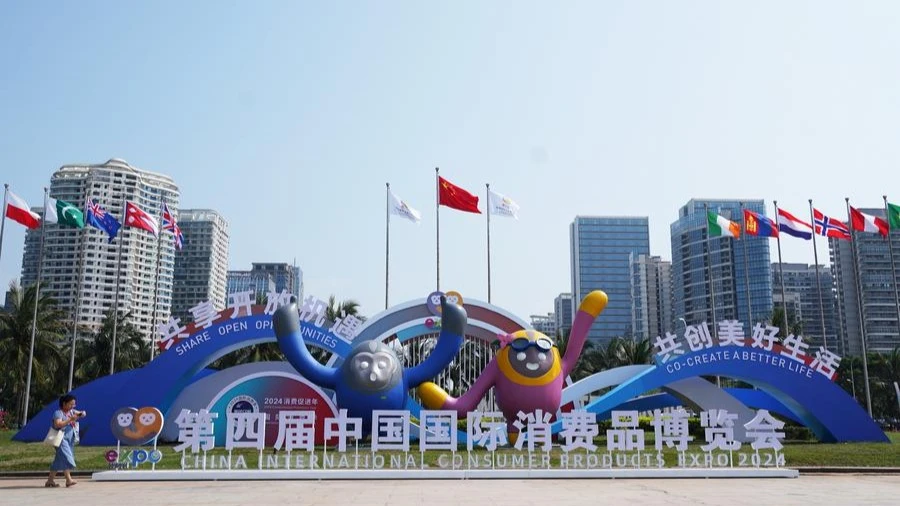
Despite claims of a "consumption downgrade" in China, consumption has continued to grow in the world's second-largest economy. The country has pledged to expand domestic demand by improving living standards and boosting consumer spending over the next five years.
Official data showed that during the first 11 months, China's retail sales of consumer goods expanded 4 percent year on year. Services consumption grew at a faster pace, with service retail categories such as culture and sports, as well as telecommunication and information, both having posted double-digit sales growth during the period.
Fan Yubo, a researcher at the Shandong Academy of Social Sciences, said the notion of consumption downgrading does not align with the mainstream of China's economic development, noting that China's total retail sales of consumer goods are expected to exceed 50 trillion yuan this year. "Rather than a downgrade, China's consumption is upgrading in diverse ways. While traditional luxury spending is cooling, consumption of new energy vehicles, smart devices and cultural and tourism experiences is surging."
Fan said China's consumer market is undergoing profound structural changes, characterized by segmentation of consumer groups and rationalization in consumption behavior. For instance, consumers are pursuing high-quality, intelligent and green products, while Gen Z consumers are no longer blindly chasing luxury brands but paying greater attention to product quality, functionality, cultural significance and cost-effectiveness.
"China's shoppers are becoming more deliberate in how they balance value, convenience and experience," said Bruno Lannes, senior partner at Bain & Company's consumer products and retail practices. He added that as consumption occasions diversify and channels proliferate, brands that succeed will be those that truly understand the Chinese consumers and tailor their strategies accordingly.
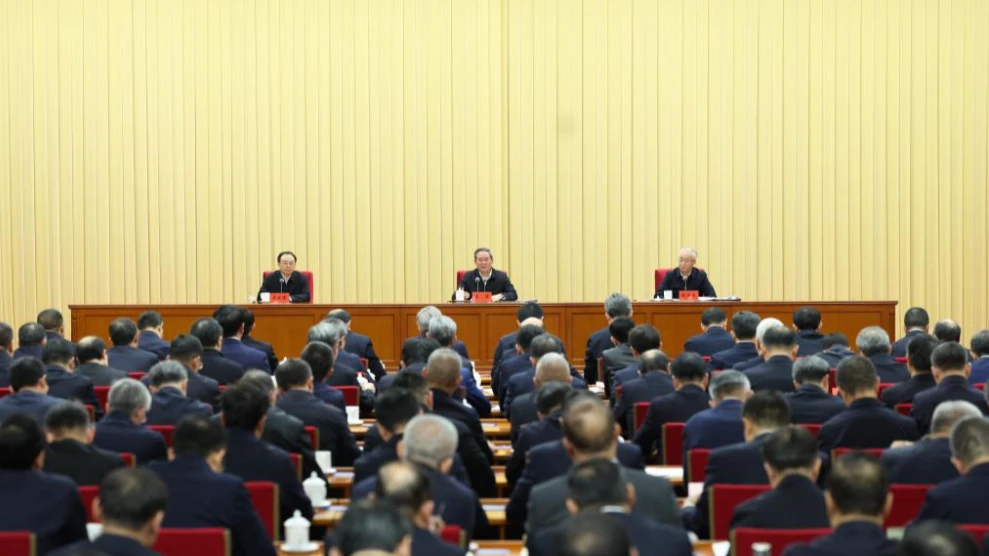
Expanding domestic demand is set to top China's major economic priorities next year, according to the recent Central Economic Work Conference, which also outlined plans to implement consumption-boosting campaigns and increase the incomes of urban and rural residents. Fan said that the government's focus on domestic demand will support sound and sustained economic growth.
INVOLUTION: GROWING PAINS VS "BUG OF CHINA MODEL"
This year, China has stepped up efforts to address "involution," a concept gaining traction in recent years to describe cutthroat competition, where companies, vying for market share, engage in aggressive price cuts but only get trapped in a cycle of diminishing returns. While some foreign media outlets alleged that involution is "both a feature and a bug of the China model," facts have shown that China is capable of curbing involution.
Thanks to multi-pronged regulatory efforts -- including capacity control in crowded sectors such as photovoltaics and cement, pricing monitoring for new energy vehicles, and the phase-out of obsolete industrial capacity -- early progress has been achieved. Major industrial firms are seeing better profitability, with their combined profits extending a solid recovery since August. China's producer price index, which measures costs for goods at the factory gate, rose 0.1 percent in November from the previous month, marking the second consecutive monthly increase.
Involution occurring in certain Chinese sectors is just growing pains, inevitable for any market economy that is highly competitive, and will eventually be dissolved, said Zhang from Shandong University.
"The sustained development of competitive market economies inevitably leads to competition, which in turn results in a decline in profits among homogeneous enterprises. Therefore, in contrast to some Western nations where low-level involution competition has led to periodic economic crises, involution has never been a feature and the bug of China's model," Zhang added.
The views of these foreign media outlets certainly overlooked the Chinese government's initiative and capacity for policy adjustments as well as the consistent measures it has taken to address the issue, according to Fan. He also noted that a series of pragmatic measures, such as optimizing supply, expanding demand and regulating market competition order, have begun to yield positive results.
China's policymakers have long been mindful of the impacts of involution on economic growth. From outlining recommendations for the 15th Five-Year Plan to setting economic priorities for next year at the recent Central Economic Work Conference, the leadership has reaffirmed its commitment to taking further action to address involution.
INNOVATION POWERHOUSE VS "FAT TECH DRAGON"
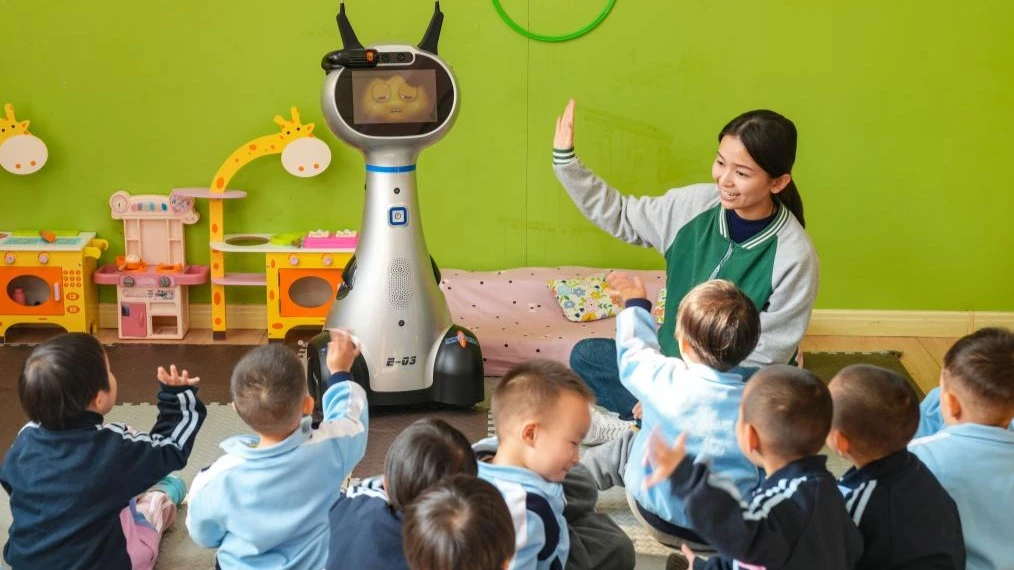
China's tech innovation made headlines throughout the year, with achievements spanning AI models, humanoid robots and electric vehicles with longer-range batteries. While critics have dismissed the country as a so-called "fat tech dragon," downplaying the role of technological progress in driving real economic growth, the facts and figures tell a strikingly different story.
The fast growth of China's high-tech and emerging sectors has injected fresh vitality into economic development, said Fu Linghui, spokesperson for the National Bureau of Statistics. During the January-November period, the value-added output of the high-tech manufacturing sector increased by 9.2 percent year on year, while that of digital products manufacturing went up 9.3 percent. Notably, the production of industrial robots and integrated circuits surged by 29.2 percent and 10.6 percent year on year, respectively.
Tax data also illustrated that innovation is increasingly bolstering the revenue growth of Chinese enterprises. In the first three quarters of 2025, sales revenue of China's "little giant" enterprises -- a title for outstanding specialized, high-tech small and medium-sized firms -- increased by 8.2 percent year on year, accelerating by 4.1 percentage points compared to 2024. Among them, sales revenue of high-tech manufacturing enterprises rose by 11.8 percent, according to the State Taxation Administration.
International agencies have also acknowledged China's rising status as an innovation powerhouse. A report released by the World Intellectual Property Organization (WIPO) in mid-September noted that China has risen to the 10th position in the global innovation ranking in 2025, up one spot from the previous year. For the third consecutive year, China hosts the highest number of top 100 global sci-tech innovation clusters, with 24 clusters listed in the 2025 index.
"If you observe China's progression in the global innovation index, it has steadily risen over the years, reflecting the underlying growth of China's innovation economy, which is faster than most of the rest of the world," said Carsten Fink, chief economist of the WIPO.
Top Headlines
Trending Stories


















© 2025 IPPMEDIA.COM. ALL RIGHTS RESERVED