




How digital reforms are reshaping Tanzania’s economic future
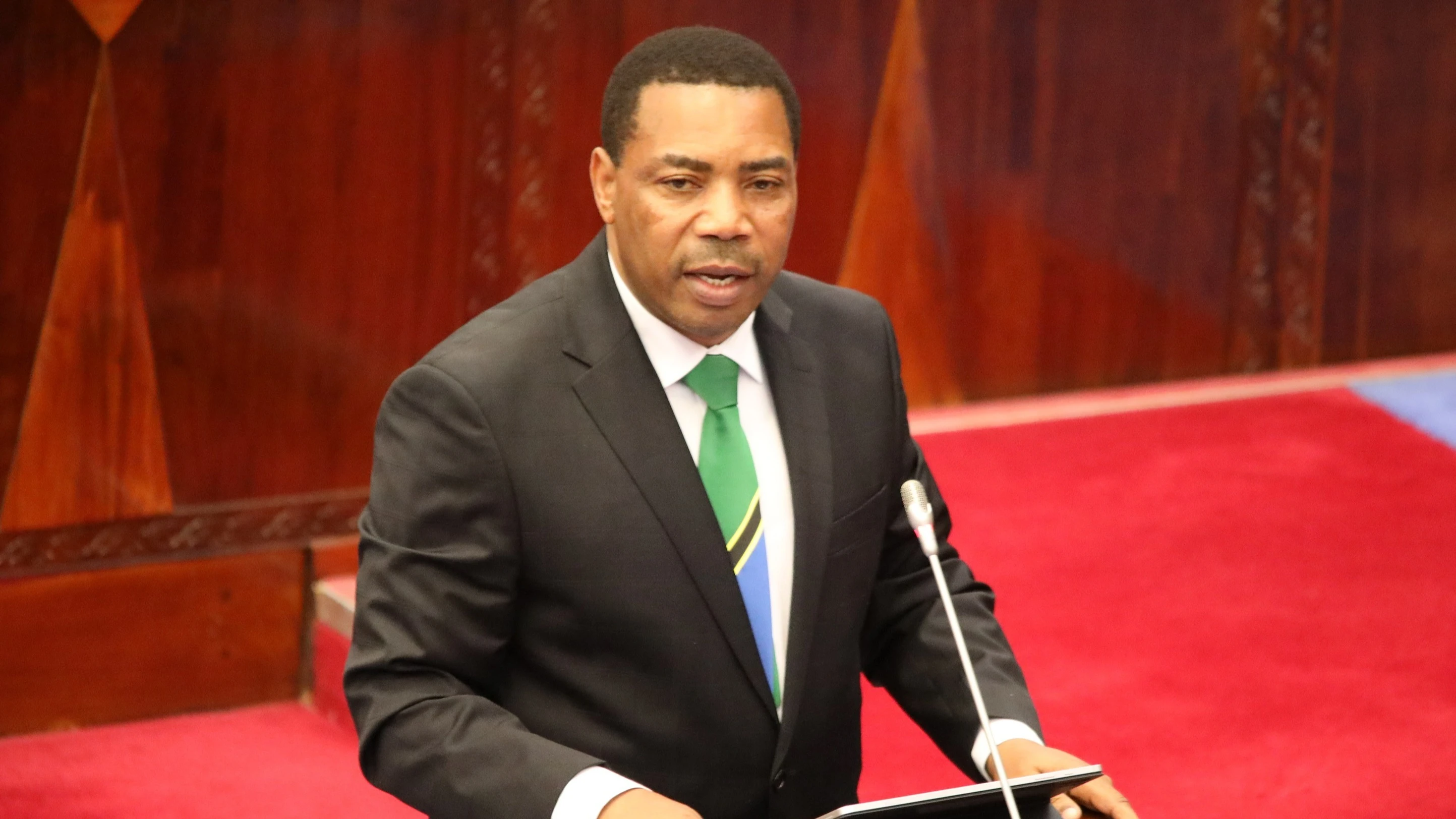
The government has demonstrated a distinctive style of leadership—one of listening and action.
President Samia Suluhu Hassan’s landmark interventions, particularly in mobile money transactional charges and digital infrastructure projects, are not only improving the lives of regular Tanzanians but also constructing a future-proof economy.
From slashing onerous transaction fees to building over 8,500 communication towers in a span of three years, the sixth phase government is breaking the rulebook through inclusive governance.
Reforming mobile money levies
The government of Tanzania introduced electronic transaction levies in July 2022 that drew immediate outrage from civil society, business people, and ordinary citizens. The levies were regarded as high and regressive, punishing the poor unfairly and discouraging electronic financial transactions.
Less than a year later, in September 2022, her government either eliminated or reduced significantly on these fees. Finance Minister Dr. Mwigulu Nchemba explained that the new approach was designed to stop double-charging and support financial inclusion. The result? A fall in the cost of transactions from the previous 4,000/- to 12,000/- range to under 5,000/- as of mid-2025.
In addition, the government came up with Tanzania Instant Payment System (TIPS) for enabling secure real-time digital payment. Bank of Tanzania Governor Emmanuel Tutuba credited such steps with empowering rural farmers and small business individuals. "Now I can send money without fear of big deductions," claimed Hellen Mosha, a Moshi mobile money operator. "It has reduced my business costs."
Infrastructure for inclusion
Aside from revamping financial policy, the government is making investments in digital access. Since taking office, Tanzania has constructed over 8,500 new telecommunication towers between 2021 and 2025, increasing the overall number to 9,278, from just 754 in 2020, TCRA statistics reveal.
These towers are introducing far and rural areas to mobile and internet connectivity, enabling farmers to access market data, youth to access e-learning portals, and small businesses to reach new customers via digital avenues.
Local Economist Dr. Mwinuka Lutengano put it that "the installation of these towers, along with reduced transaction fees, has boosted digital uptake in Tanzania."
This concurrent push—reform and invest in infrastructure—is a systems-thought-style style of governance not normally seen in African policymaking.
Vision 2050: Tanzania's High-Income and Digital Aspiration
President Samia launched Vision 2050 on 17th July 2025, in Dodoma with a vision that is ambitious: transforming Tanzania into a high-income economy with a GDP goal of $1 trillion. The vision places technology first, democracy, environmental care, and aims to digitize 80 percent of all government services.
Over 1.17 million stakeholders, mostly youth, made recommendations via USSD channels and digital platforms—demonstrating her government's commitment to participatory planning. Professor Kitila Mkumbo highlighted that this vision naturally supplements the digital reforms already underway, like reduced transaction costs and increased connectivity.
Vision 2050 is not merely a national vision—it's also convergent with the UN Sustainable Development Goals (specifically SDG 9 relating to infrastructure and innovation) and the African Union's Agenda 2063, positioning Tanzania for serious involvement within the African Continental Free Trade Area (AfCFTA).
An Expensive Past
Before the 2022 reforms, the cost of electronic transactions was very high to the extent that many citizens reverted to cash usage. A 2022 Twaweza report identified that 70 percent of Dar es Salaam citizens reduced the usage of mobile money due to the fees, leading to the government loss of 1.25trn/-.
The Bank of Tanzania (BoT) reported mobile money transactions declined from 117 million in 2019 to 100 million in 2023. According to Professor Abel Kinyondo, the decline was not only caused by the levies but also by external shocks like COVID-19 and the Russia-Ukraine war that tightened finances.
Individuals like Alicia Rugemalila in Mwanza returned to using cash. "It was just too expensive to send money by phone," she said.
The Global Context
Whereas mobile transaction levies have remained at high or even increasing rates during their stays in Kenya and Uganda, Tanzania has been able to reconcile reform with fiscal responsibility. Uganda's 2018 tax on mobile money drew public demonstrations and wasn't meaningfully undone until 2025. Kenya's VAT on digital services discouraged adoption and widened the digital gap.
Tanzania, conversely, has preserved government revenues while making digital access affordable. It is rapidly becoming an example of policy innovation at the regional level that will propel AfCFTA's vision of facilitating cross-border digital trade.
Vision 2050 puts technology front and center in Tanzania's development strategy. From rural broadband penetration to digitalizing payments, the country is charting its own path to the future.
This is in line with international targets like SDG 8 (Decent Work and Economic Growth) and positions Tanzania as the hub of Africa's digital trade value chain. Low-cost transactions and improved connectivity are giving small businesses a beachhead in domestic markets.
Voices of the People: Real-Life Stories of Change
The reforms are policy wins not only—they are altering people's lives.
Consolatha Costatine, a 22-year-old student from Morogoro, now pays tuition fees with mobile money without sacrificing a lot of money to fees. "I can save for books now," she says.
Ikorongo Oto, a Geita petty trader, appreciates the improved coverage and lower transfers: "Lower costs allow me to pay suppliers on time and enter new markets."
These are just a few examples of the many ways that responsible policy is enabling social and economic mobility in Tanzania.
Policy Proposals for Sustainability
To ensure these advances take hold, the government needs to increase public awareness campaigns on digital money tools like TIPS, accelerate investment in rural connectivity, collaborate with telecoms, banks, and civil society organizations to close digital access gaps and anchor pensions and other cash transfers to inflation.
All these will ensure that digital inclusion is not yet another cause of inequality.
A New Chapter in Tanzanian Governance
In less than five years, the government has established a bold new course for Tanzania—one of listening government, responding, and innovating. The mobile transaction levy reforms, investment in infrastructure, and Vision 2050 master plan are testimonials to transformative leadership by empathy and pragmatism.
While other nations struggle with balancing digital taxation and inclusion, Tanzania leads the way on how to do it—one based on listening, not lecturing. As Bishop Benson Bagonza so aptly put it, "A responsive government listens to its people."
Now it is time for the people and institutions to seize this moment—and ensure Tanzania's digital revolution continues to lift every citizen to greater heights.
Emmanuel Kisika is an economist based in Dar es Salaam
Top Headlines
Trending Stories














© 2026 IPPMEDIA.COM. ALL RIGHTS RESERVED