




How ‘structural bias’ shadows women in global labour market
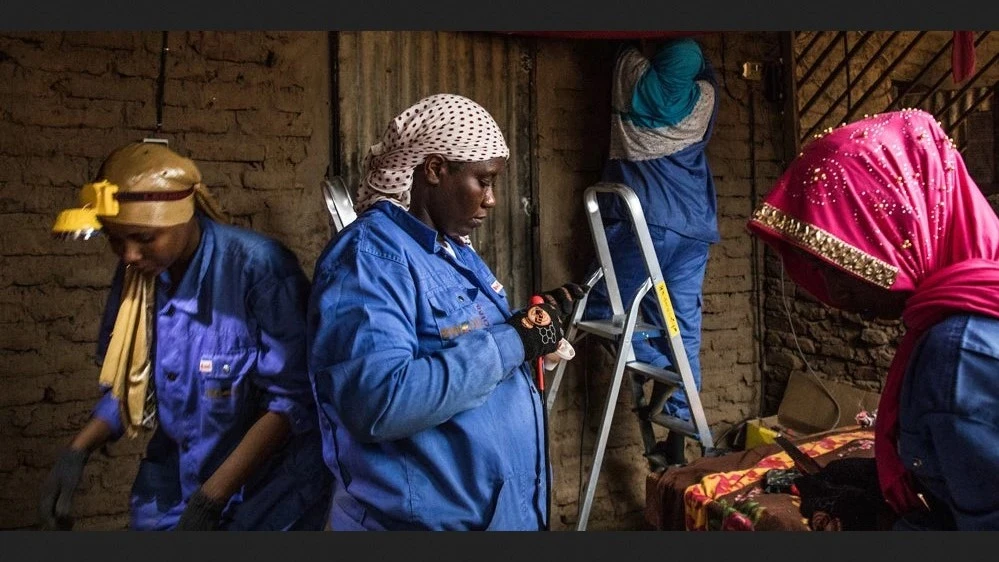
A landmark report on world inequality reveals a stark reality of women’s longer hours of work than that of men, but which is not translated into a decent pay.
Titled “World Inequality Report 2026”, and authored by Chancel, Gómez-Carrera, Moshrif, Piketty, and other colleagues, it says “women capture just over a quarter of global labour income, even though time use surveys suggest that they work for longer hours than men, often in an unpaid form.”
Furthermore, it notes that if unpaid domestic and care work is included, which is disproportionately undertaken by women, “they earn only about one-third as much per working hour as men.”
Thus, women across the world face a double burden of more hours of work, and a lower pay, meaning structural bias still shadows women in the global labour market.
The report, which has benefited from the support of the United Nations Development Programme (UNDP), the World Inequality Lab, and the European Union under a Horizon 2020 WISE grant and an ERC Synergy DINA grant, suggests gender parity can be attained through workable strategies.
Yet, the current situation is that on average, women earn only 32 percent of what men earn per working hour, accounting for both paid and unpaid activities, compared to 61 percent when not accounting for unpaid domestic labour, a share that has barely shifted since 1990. “These findings reveal not only persistent discrimination, but also deep inefficiencies in how societies value and allocate labour.” That is, gender inequality is not only a question of fairness, but also a structural inefficiency: economies that undervalue half of their population’s labour undermine their own capacity for growth and resilience.
The report acknowledges that despite major socioeconomic transformation over the past two centuries, gender inequality remains a defining feature of the global economy. It says women today are more educated, more active in the labour market, and more visible in positions of leadership than ever before. “Yet, when we examine how work hours and income are divided between men and women, a striking reality emerges: the world is still a long way from achieving gender parity.”
Looking at the global level, it suggests that women contribute significantly to both paid and unpaid work, but their economic rewards remain much smaller. This is because they are more likely to work longer hours when both market and household labour are counted, yet they earn less, own less, and occupy fewer formal jobs. Therefore, across every region, women’s shares of labour income lag behind men’s, and progress in narrowing these gaps has been slow. “Even where gains have been made in education or employment participation, they have not translated into equal pay or equal access to opportunities.”
The report places the current labour market imbalance in perspective. It says that women still suffer gender inequalities across several key dimensions. For instance, women contribute a majority of total working hours worldwide, once unpaid domestic work is included, yet they only earn around one-third of aggregated labour income. It says focusing on economic work, employment rates lag significantly behind those of men, with women much less likely to hold a paid job, and when employed, they earn substantially less per hour. “Even in education, where female high school enrolment has increased dramatically, parity has not been fully achieved at the global level.”
This translates into saying that not only that gender inequality persists, but that its scope should be apprehended in all its complexity by studying its social, educational, and economic dimensions. Although globally women devote more hours to household responsibilities, and these hours are rarely compensated or formally recognised, they represent a substantial portion of total labour time and contribute directly to social welfare.
“The result is a paradox: men appear to work longer when only market hours are considered, but women consistently surpass them in total working hours once unpaid activities are taken into account.”
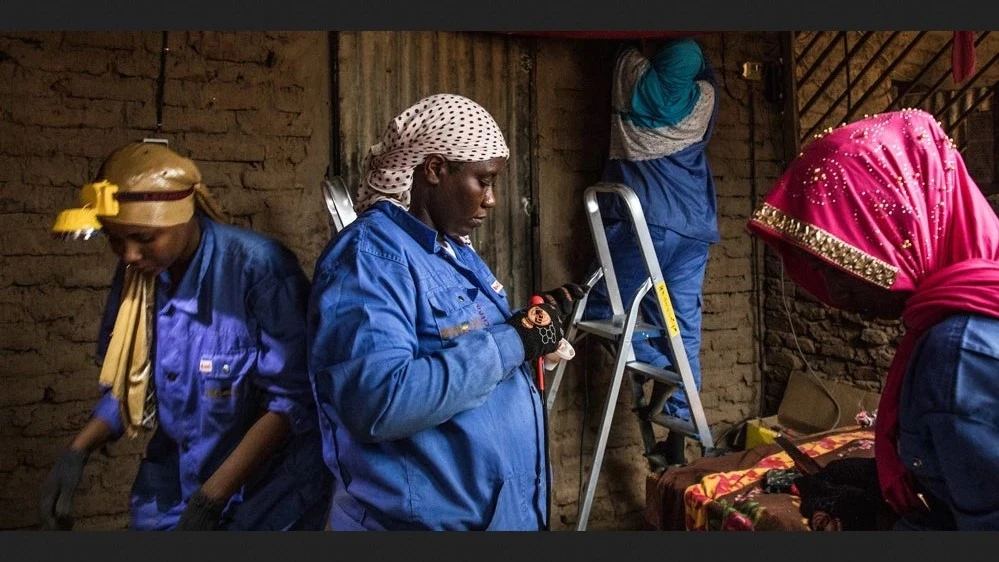
According to the report, the labour market imbalance carries deep implications. It can limit women’s opportunities in the labour market, as time spent on unpaid work constrains the hours available for paid work, training, or career advancement. This, together with fewer paid jobs available for women, gender discrimination, and cultural norms, increases gender inequality. It reinforces the wage gap: women not only work more hours in total, but they also earn less for the paid portion of their labour. It also highlights how gender inequality extends beyond wages and employment statistics to the organisation of daily life.
“Working time itself is unequally distributed, with women bearing the heavier load. Their labour is rendered invisible by the non-inclusion of domestic and care work in national accounts.”
The report points out that the long-run decline in global working hours is, therefore, a story of uneven gains. Why? It is because humanity may be working fewer hours overall, but men have benefited most from reductions in formal work, while women’s total workload remains high. Thus, this uneven distribution of time is one of the clearest demonstrations that progress in labour conditions has not automatically translated into gender parity. It stresses that structural barriers play a central role.
“Access to affordable childcare, transportation, and family leave policies strongly influence women’s ability to enter and remain in the labour force. In countries where such support is weak, women are more likely to withdraw from paid employment, especially after childbirth. Thus, discrimination in hiring and promotion also reduces opportunities, particularly in higher-paying sectors.
According to UN data on gender demographics, as of 2025-2026 the global population in 2026 is estimated at 8.3 billion (male population estimated at 4,171, 512, 568 and female population at 4,129,165,828). Of this, total billionaires are estimated at 3,028 – that is 2,622 male billionaires (86.5 per cent) and 406 female billionaires (13.5 per cent). Although there are more men in younger age groups, the gender balance typically reverses as the population ages. Women make up more than half of the global population over the age of 48.
Top Headlines
Trending Stories













© 2026 IPPMEDIA.COM. ALL RIGHTS RESERVED