




Fixing education starts with listening: What government leaders must learn from critics
ON a humid school morning somewhere on the outskirts of Dar es Salaam, a child edges an exercise book across a bare cement floor, searching for a spot where the light is good enough to read. There is no desk.
Around her, dozens of other pupils sit the same way, knees drawn in, backs bent forward, trying to listen, trying to learn. The teacher stands at the front of the room, managing a class far larger than it should be, knowing that even the best lesson plan cannot fully overcome the limits of space, furniture, and time.
Scenes like this are not rare in Tanzania’s public schools. They have existed for years, quietly and persistently. What has begun to change, however, is not the reality itself but the way senior leaders are beginning to talk about it, and, more importantly, whether they are willing to listen when others speak honestly about it.
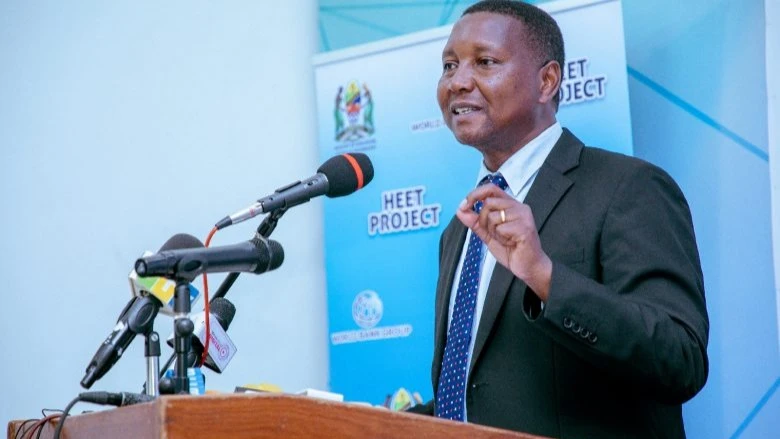
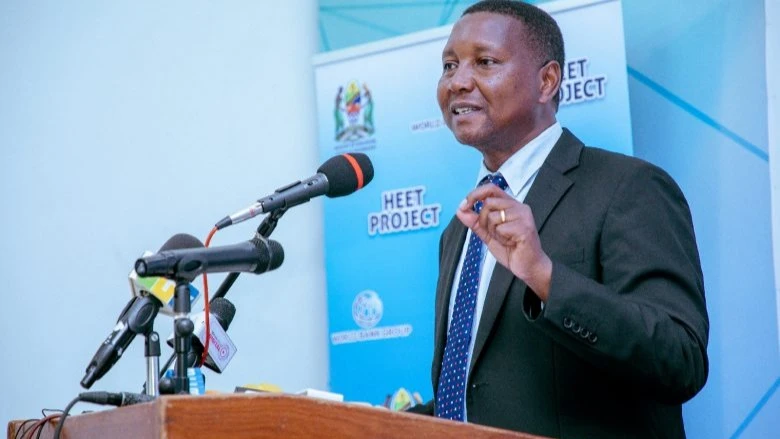
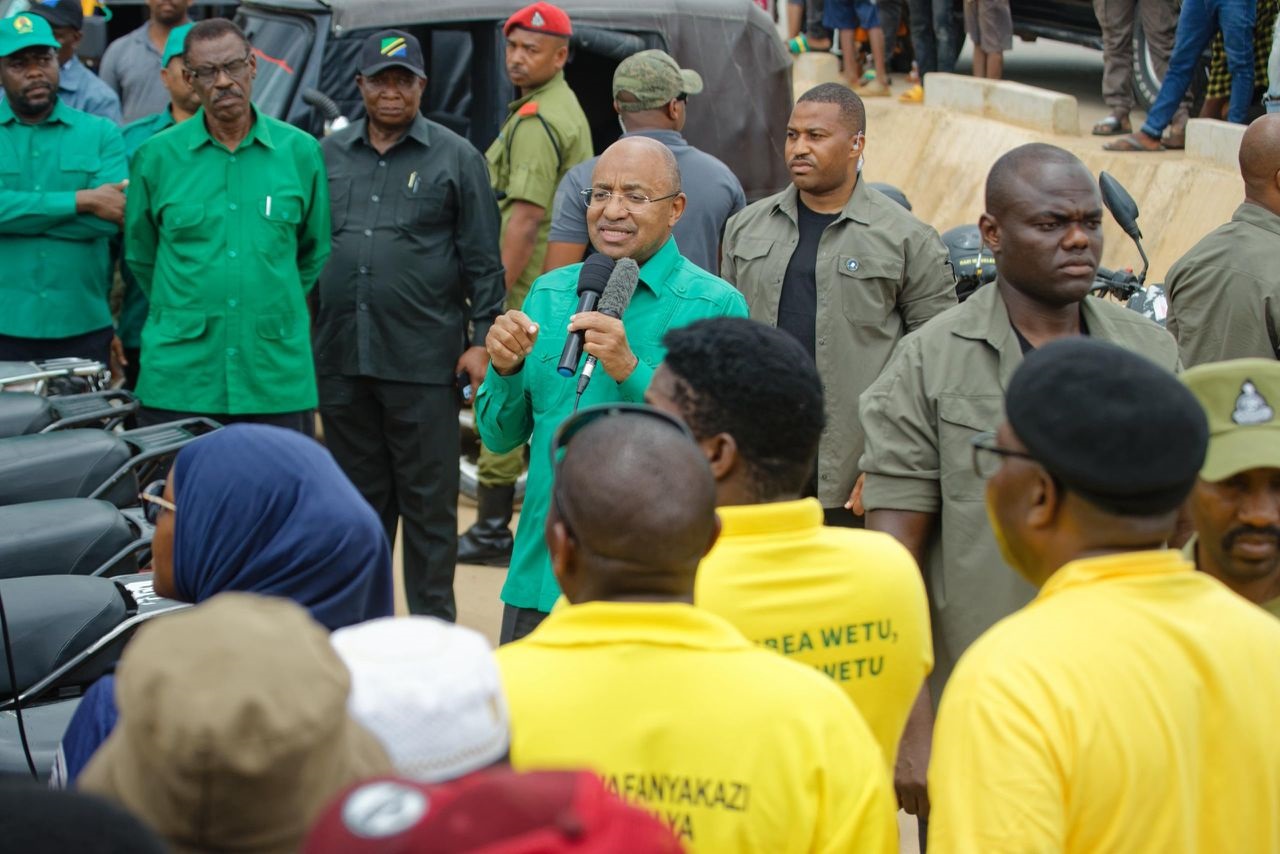
When the Minister for Education, Science and Technology, Prof. Adolf Mkenda, recently said that critics of the education system should not be punished but treated as catalysts for reform, his words carried unusual weight. To some, it sounded like common sense. To others, especially those who remember the country’s political past, it sounded almost daring.
Tanzania has long prided itself on stability, discipline, and unity. However, those same values have sometimes made public criticism uncomfortable, particularly when it touches a sector as politically sensitive as education. To acknowledge weakness has often been mistaken for admitting failure. To point out gaps has been seen, at times, as disloyalty.
That tension is not theoretical. It is written into the country’s recent history. In 2005, as his presidency drew to a close, President Benjamin Mkapa publicly rebuked the civil society organisation HakiElimu for publishing reports highlighting teacher shortages, overcrowded classrooms, and weak learning outcomes.
Speaking at a rally in Chamwino, he accused the organisation of distorting reality, undermining teachers, and tarnishing the image of national education reforms. He went so far as to ban HakiElimu from engaging in education-related activities for the final weeks of his administration, insisting that it had focused too much on what was wrong and too little on what the government had achieved.
The message was unmistakable. Those who spoke openly about cracks in the system were not helping; they were harming. Several voices in the education space, activists, researchers, and even teachers, felt the chill. Some softened their language. Others retreated altogether.
Nevertheless, the problems mentioned did not fade away. Two decades later, their echoes are hard to ignore. At Mtambani Primary School in Dar es Salaam, reports showed that more than 867 pupils were sitting on the floor because the school had fewer than 600 desks for a student population exceeding 2,600.
In Sengerema District, Mwanza Region, around 300 Standard Four pupils were found learning while seated on bare classroom floors. In another case, a school with 143 pupils relied on a single teacher to handle all subjects and grade levels. In Kilindi District, a primary school reportedly operated for more than four decades without permanent toilet facilities.
These are not isolated stories shared for shock value. They point to patterns that teachers, parents, and education officers quietly acknowledge. Nationally, Tanzania’s primary school teacher–pupil ratio averages around 1:51, well above the recommended 1:40, and in rural areas it is often far worse. Enrollment has expanded impressively; primary net enrollment now exceeds 95 per cent, but infrastructure, staffing, and learning materials have struggled to keep pace.
This is the moment in which Prof. Adolf Mkenda’s remarks truly matter. When he argues that critics of the education system should not be punished, he is naming an uncomfortable truth many people inside the system already understand: silence is expensive.
It does not save time, protect reputations, or preserve order. Instead, it quietly shifts the burden onto children, teachers, and families who have the least power to absorb it.
In practice, silence shows up in ordinary ways. A head teacher, anxious about blame, tones down reports of missing desks: a teacher who once raised concerns about overcrowding stops doing so after being labelled difficult.
A parent who writes letters and attends meetings eventually gives up. None of these decisions feels dramatic, yet together they allow minor problems to settle in and harden. Over time, what could have been corrected early becomes normal, and what becomes normal turns into a crisis.
What makes Mkenda’s position striking is not that it would shock reformers elsewhere. Globally, it is almost routine. What makes it notable is how sharply it departs from a long-standing habit in Tanzanian public life: defending appearances first, dealing with consequences later. For years, criticism has often been treated as embarrassment rather than information.
In education systems that perform well internationally, this instinct is largely absent. In Finland, teachers’ unions openly challenge curriculum overload and rising workloads, and policymakers respond by revising frameworks.
In the United Kingdom, inspection reports regularly expose failing schools, provoking debate and targeted reform. In South Korea, sustained criticism of exam pressure pushed leaders to rethink student well-being. Even in tightly governed Rwanda, independent assessments increasingly shape staffing and infrastructure decisions.
Across these contexts, the lesson repeats itself with remarkable consistency: systems that listen correct themselves faster. Still, it would be dishonest to ignore the political risks of openness.
Tanzania’s history includes more than a few ministers who lost their positions after publicly acknowledging weaknesses in their sectors. In environments where leaders are expected to project control and confidence, naming gaps can be read as incompetence or even quiet defiance.
That reality raises a difficult question. Does Mkenda risk his own position by encouraging frank discussion of educational failures? The answer depends on how his words are received by those who appointed him.
If openness is seen as damaging to the government’s image, the danger is real. Ministers are often expected to absorb criticism rather than amplify it. In that sense, Mkenda is walking a narrow path, balancing policy integrity against political expectation.
However, there is another way to read his stance. By acknowledging weaknesses early, Mkenda may be protecting the system and its leadership from more profound embarrassment later. Problems that are buried rarely stay hidden.
They resurface through media exposés, public frustration, or declining outcomes that can no longer be explained away. Addressing criticism before it becomes a scandal is not a weakness. It is foresight.
Teachers understand this instinctively. A primary school teacher in Morogoro put it plainly: “When we talk about shortages, we are not attacking anyone. We are talking about what we see every day. If we stop talking, the children pay the price.”
That lived experience is often missing from official narratives. Policy documents speak of ratios and budgets. Classrooms speak of fatigue and improvisation. A teacher managing more than fifty pupils cannot give each child meaningful attention. A girl in a school without proper sanitation quietly misses lessons. A pupil sitting on the floor struggles not only to write, but to feel valued.
Critics do not create these realities. They describe them. For Mkenda’s words to matter, they must be followed by action: better teacher deployment, faster classroom construction, adequate desks, safe sanitation, and protected feedback systems. History will judge this moment not by speeches, but by outcomes. For the child still seated on the floor, listening is the first step toward being seen.
Top Headlines
Trending Stories




© 2026 IPPMEDIA.COM. ALL RIGHTS RESERVED