




Why rural accessibility is the backbone of Tanzania’s future
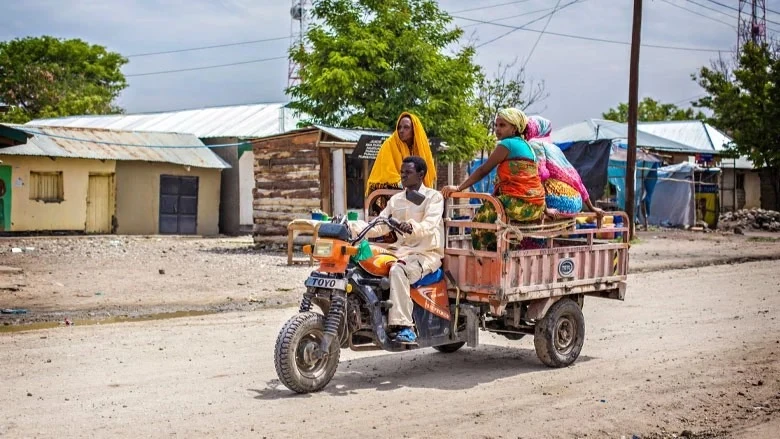
THE road taught me this lesson long before any report ever could.
We were returning from the interior villages of Morogoro after a long day of fieldwork - focus group discussions that started at sunrise and stretched into the late afternoon.
The road had tested our patience all day: deep holes, slippery mud, and places where it was hard to tell if it was still a road. There were moments when the driver hesitated, moments when courage felt like stubbornness and moments when we all quietly prayed the car would just hold on a little longer.
It didn’t. Just as we were nearing a small town where we usually rested, the engine gave up. The sun was setting fast, the light was fading, and the wind was picking up. The clouds looked ready to do what clouds do best - rain. I felt worried, not panicked, just doing quick calculations in my head: If the car cannot be fixed, what next?
As the driver checked the engine, I heard something before I saw it.
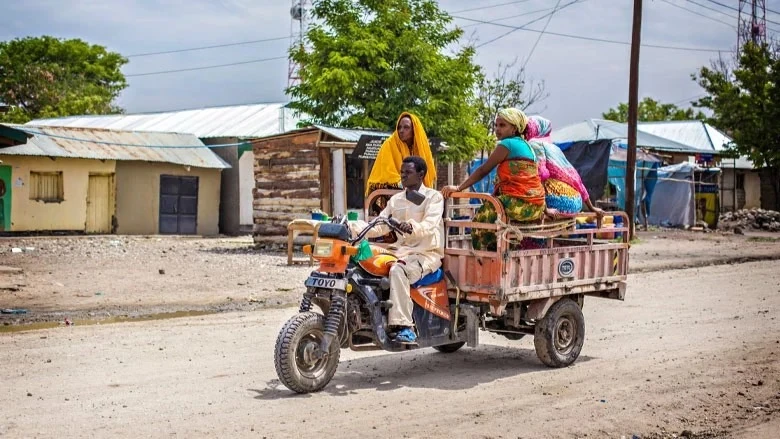
Wet soil. Pressed under tired feet. A woman was walking quickly - not because she was late, but because daylight was leaving her behind. When the sun goes down on that road, it becomes dangerous. When the rain comes, the road disappears completely.
She carried a baby on her back - close, warm, patient. In one hand, a small plastic bag with medicine. In the other, a simple kitochi phone, its battery almost finished. She had walked many kilometres from a village that does not appear on most maps, to a dispensary that appears in government plans - but still feels very far when you are walking, especially in the rainy season.
Now she was walking back. We greeted each other, and slowly her story came out. That road had shaped her entire life. It was the road she walked for seven years of primary school. The same road she tried to walk when she joined Form One. By Form Two, she was tired. Like many others, when the rainy seasons came and classes became impossible to reach, she stopped going back.
“Tumeshazoea,” she said softly. This is our life.
I gathered what I could from the car - snacks, juice, bottled water, and a kitenge bag I usually carry during fieldwork - and gave them to her. She almost knelt down to thank me before I stopped her to kneel. I wished her a safe journey home. We could not take her to her village; the car was still unwell. In fact, she helped us - calling her brother, a ‘bodaboda’ rider in a nearby town, who brought a small part the driver needed to try one more repair.
That encounter stayed with me. On paper, this is called a transport problem. In real life, it is a dignity problem. And that is why the Rural Accessibility Index (RAI) matters.
The RAI measures one simple thing: how many rural people live within two kilometres of a road that is passable all year, even during the rainy season. Tanzania’s latest assessment shows that about 61 percent of rural residents meet this standard. This also means that nearly four out of every ten rural Tanzanians do not - not just far from roads, but far from opportunity, safety, and choice.
Behind this statistics are very human questions: Can a mother reach a clinic when she is in labour? Can a farmer reach the market when prices are good? Can a girl reach secondary school safely, and keep going when the rains come? Can a nurse or teacher agree to work in a rural area - and stay?
Tanzania is not short of land, people, or ambition. The country manages a vast district road network serving millions of rural citizens. But too many of these roads struggle to survive the rain.
Almost half become difficult or impossible to use during wet seasons. The problem is not geography alone. Evidence shows the deeper challenges lie in planning, investment choices, maintenance systems, and coordination.
And that is actually hopeful. Because it means this situation is not destiny. It is design. And design can be changed.
When a road is improved, many things change at once. Transport costs fall. Farmers sell more. Clinics receive supplies. Teachers stay longer. Children stay in school. Young people begin to imagine a future at home instead of feeling pushed toward already congested urban centres.
A road is never just gravel and concrete. A road is a social contract. It is the state saying: You matter. You are not forgotten.
Globally, this is well understood. Rural access is tracked as part of the Sustainable Development Goals. Countries invest in rural roads not only to grow GDP, but to reduce poverty, improve health, strengthen education, and build resilience to climate change.
Tanzania understands this too
The country is already implementing major programmes to improve inclusion and resilience in rural transport. And importantly, it has strong national institutions to lead this work - especially the Tanzania Rural and Urban Roads Agency (TARURA).
Reading TARURA’s draft Strategic Plan for 2026/27–2030/31, my worries softened into hope. The plan is grounded, honest, and ambitious. It focuses on maintenance over repeated reconstruction, on removing bottlenecks that cut communities off during the rains, on climate-resilient technologies, and on data-driven planning. It aligns clearly with Tanzania Development Vision 2050, recognising that accessibility is not a side issue but central to growth, equity, and national unity.
The plan also speaks honestly about challenges. Funding gaps are real. Climate shocks are growing harsher. The road network is vast, and expectations are high. But instead of hiding these realities, the strategy invites partnership - from development partners, private investors, financiers, and communities themselves.
Morogoro offers a glimpse of what this future could look like. The Morogoro Integrated Growth Corridor (MIGC) concept shows how rural roads, bridges, flood control, tourism access, and last-mile connectivity to the SGR can unlock agriculture, industry, and eco-tourism together. Roads here are not just links between places; they are links between livelihoods - farm to market, village to railway, mountain to tourist, and youth to job.
This is why investing in TARURA is not charity. It is a strategy. As Tanzania looks toward 2050, the question is no longer whether we have the evidence.
The question is whether we have the courage to act like a country that truly believes rural people are not beneficiaries - but citizens. I often think of that woman on the muddy path. If she reaches the clinic and finds it closed because the nurse could not stay on that road, then the system has failed them both.
If she turns back in the rain, carrying not only her child but the knowledge that survival still depends on weather, and then development has not yet arrived.
This is what rural accessibility really measures: how far the state has gone in closing the distance between people and their rights.
And maybe this is why I love visiting villages. Because every time I go, I come back with mud on my shoes, stories in my heart, and something urgent to tell the world about Tanzania: that our future does not begin in conference rooms or capital cities alone but it begins on the road, and sometimes, on the absence of one.
The author is an independent consultant, can be reached at annarugaba@gmail.com
Top Headlines
Trending Stories






© 2026 IPPMEDIA.COM. ALL RIGHTS RESERVED