



New report reveals alarming global income, wealth inequality
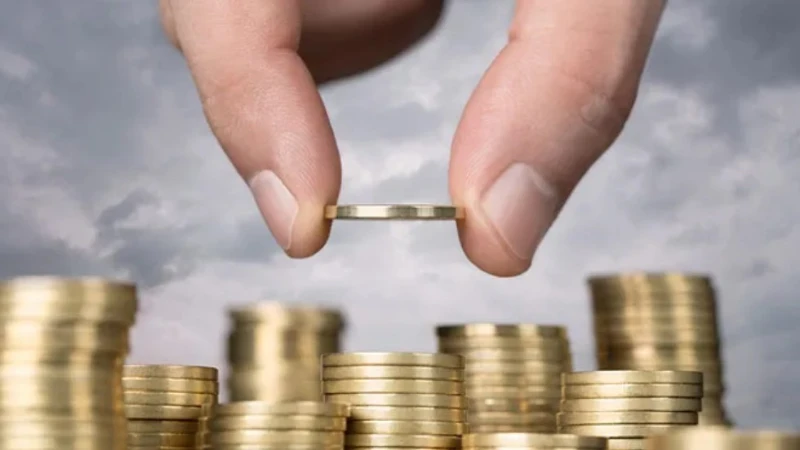
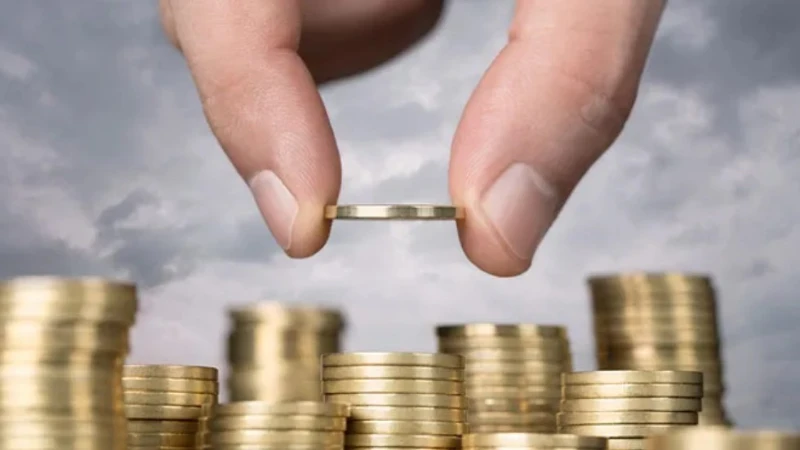
WE live in a rapidly evolving world in which wealth and economic influence remain disproportionately held by a fraction of financial titans to the detriment of the majority of the poor, resulting in global income and wealth inequality, according to a new report titled “World Inequality Report 2026”.
Drawing data from 200 researchers across all continents, affiliated with World Inequality Database, the report says the richest 10 per cent of the global population own about three-quarters of all wealth, while the poorest half hold barely 2 per cent. This situation is not static, it is accelerating.
“[That is] fewer than 60,000 multi-millionaires control three times more wealth than half of humanity combined. Within most countries, the bottom 50 per cent rarely possess more than 5 per cent of national wealth,” the report shows. This translates into saying the wealthiest 0.001 per cent alone, who are fewer than 60,000 multi-millionaires, control today three times more wealth than half of humanity combined.
“Their share has grown steadily from almost 4 per cent in 1995 to over 6 per cent today, which underscores the persistence of inequality. Since the 1990s, the wealth of billionaires and centi-millionaires has grown at approximately 8 per cent annually, nearly twice the rate of growth experienced by the bottom half of the population. The poorest have made modest gains, but these are overshadowed by the extraordinary accumulation at the very top.
Not only that, the report continues to show that the wealthiest contribute disproportionately little to public finances as effective tax rates climb for most of the population, but fall sharply for billionaires and centi-millionaires.
“This not only undermines tax justice, but also deprives societies of the resources needed for education, healthcare, and climate action.”
Shedding light on the global poverty incidence, Multidimensional Poverty Index (MPI) 2025, published last year, says: “Poverty, once seen as mainly a standalone socioeconomic concern, is now inextricably linked with planetary pressure. Without ambitious efforts to mitigate climate fallout, the number of people in extreme monetary poverty could nearly double by 2050.” It suggests poverty and climate shocks create a double burden as poverty drives exposure to climate hazards, which reinforce and prolong poverty.
In line with this, the World Inequality Report 2026 says, the richest 10 per cent of individuals account for 77 per cent of the carbon emissions associated with private capital and 47 per cent of consumption-related emissions, while the poorest half contribute just 3 per cent (and 10 per cent of consumption-based emissions). Addressing this ‘double burden’ requires a targeted realignment of financial and investment structures that fuel both emissions and inequality, according to the report.
“Those who emit the most are better insulated, with resources to adapt to or avoid the consequences of climate change. This unequal responsibility is therefore also an unequal distribution of risk. Climate inequality is both an environmental and a social crisis.”
At the international level, the report shows how the global financial system reinforces inequality. “Wealthy economies continue to benefit from an ‘exorbitant privilege’: each year, around 1 per cent of global GDP (about three times as much as development aid) flows from poorer to richer nations through net foreign income transfers associated with persistent excess yields and lower interest payments on rich-country liabilities.” Thus, the report says, reversing this dynamic is central to any credible strategy for global equity.
UNCTAD’s World of Debt 2025 Report says 3.4 billion people live in countries that spend more on interest payments than on either health or education. “Public debt can be a powerful tool for development, enabling governments to finance critical expenditures and invest in a better future for their people. However, when [it] grows excessively or its costs outweigh its benefits, it becomes a heavy burden. This is particularly challenging for developing countries, which face an annual sustainable development financing gap of $4.3 trillion, often while contending with high debt costs,” it says.
Furthermore, the World Inequality Report 2026 says, unequal access to public services, job opportunities, and exposure to trade shocks has fractured social cohesion and weakened coalitions necessary for redistributive reform. The report provides a framework for understanding how economic, environmental, and political inequalities intersect. “It calls for renewed global cooperation to tackle these divides at their roots: through progressive taxation, investment in human capabilities, climate accountability tied to private capital ownership, and inclusive political institutions capable of rebuilding trust and solidarity.”
Its findings are that inequality remains extreme and persistent as it manifests across multiple dimensions that intersect and reinforce one another, and reshapes democracies, fragmenting coalitions and eroding political consensus.
“Yet, data also demonstrates that inequality can be reduced. Policies such as redistributive transfers, progressive taxation, investment in human capital, and stronger labour rights have made a difference in some contexts.”
The report suggests that proposals such as minimum wealth taxes on multi-millionaires illustrate the scale of resources that could be mobilised to finance education, healthcare, and climate adaptation. Reducing inequality is not only about fairness, but also essential for the resilience of economies, the stability of democracies, and the viability of our planet. Where wealth redistribution is strong, taxation becomes fair, social investment is prioritised, inequality narrows, and shared prosperity becomes a reality.
ENDS
Top Headlines
Trending Stories


© 2026 IPPMEDIA.COM. ALL RIGHTS RESERVED