




Impact of internet of things on early childhood education
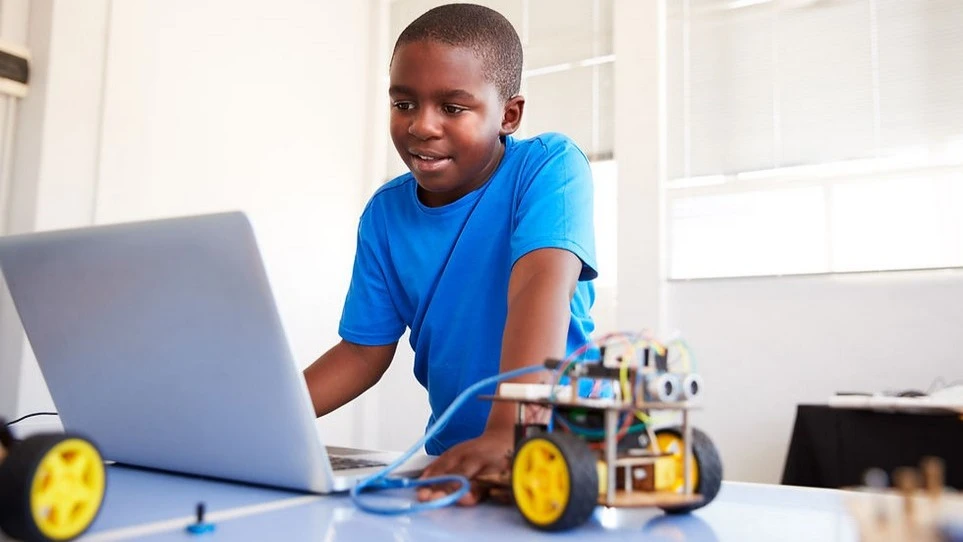
THE use of appropriate emerging (also called frontier) technologies such as the internet of things (IoT) in early childhood education (ECE) is linked to quality education and better learning outcomes. This claim is supported by a broad cross-section of literature.
Luhur Prasetya, Amir Rofiudin, and Heru Herwanto in their article titled “Implementation of Internet of Things (IoT) in Education: A Systematic Literature Review” they published in Journal of Education and Computer Applications in 2025 suggest that “IoT offers exciting opportunities to improve the quality of learning, streamline school operations, and support a personalised learning experience.”
The authors, who were MA students at Postgraduate School, State University of Malang, Indonesia, analysed the development, benefits, and challenges of implementing IoT in education through a systematic literature review. In the process they reviewed 25 articles published between 2018 and 2025 which they selected from leading academic databases such as Scopus, IEEE Xplore, SpringerLink, and ScienceDirect.
Their findings show that “IoT significantly improves learning effectiveness, increasing outcomes by up to 30 per cent through smart classrooms, real-time monitoring, automated attendance systems, and personalised learning.” They also say it supports operational efficiency in schools and saves the energy consumption of up to 25 per cent and better security measures. In particular, they say learner engagement, more personalised learning, and decision-making supported by real-time data.
Besides those benefits, infrastructure gaps (especially in rural areas, recorded in 40 per cent of the studies), data privacy issues, and limited digital readiness among teachers were among the challenges they came across. To address those challenges, they propose workable mitigation strategies such as teachers’ capacity building through training, supportive policy-making, and improved cybersecurity.
Although the history of IoT can be traced to 1982, Mark Weiser (1952-1999), an American computer scientist and father of ubiquitous computing, is said to have introduced the concept of ubiquitous computing, a term he coined in 1988. His concept aligns with that of IoT. However, Kevin Ashton is said to be the founder of IoT in 1999, according to researchers Jameel Yalli, Mohd Hasan and Aisha Badawi (2024).
“Ashton was an executive director of the Auto-ID centre at the Massachusetts Institute of Technology (MIT), and the first to coin the term IoT. The Auto-ID centre as a collaboration between industries and private sectors has 7 research laboratories across 4 continents, holding 60 researchers and 15 professional leading research networks in IoT,” the authors say in their article.
Other authors Jameel Yalli, Mohd Hasan and Aisha Badawi in their article titled “Internet of Things (IoT): Origins, Embedded Technologies, Smart Applications, and Its Growth in the Last Decade” published in 2024 assess the evolution, adoption, technologies, and growth of IoT and report all findings in a single document to give readers the full awareness of IoT and its application. The reports looked at how 25 billion IoT devices were connected by 2020 with 50 billion permanent connections and over 200 billion intermittent connections.
They say Strategy Analytics had projected 38 billion connections by the end of 2025 and 50 billion by 2030. They introduce a term called “smart education”, which they say, describes the application of cutting-edge ideas and technology to improve the educational process.
“To make education more interactive, individualised, and accessible, it entails integrating digital tools like artificial intelligence, online learning environments, and interactive whiteboards. The goal of smart education is to use technology to enhance instruction, involve [learners], and streamline the learning process as a whole.”
Remya.S.P in an article titled “Internet of Things (IoT) and the Role of IoT in Education” published in International Journal of Creative Research Thoughts (IJCRT) in 2021 says IoT “refers to uniquely identifiable objects or things and their virtual representation is internet like structure.” The author says people, who came up with this idea, have also realised that the IoT ecosystem is not limited to a particular field, but also has business applications in education, home automation, vehicle automation, factory line automation, medical, retail, healthcare and more.
“The IoT network connects different types of devices like personal computers, laptops, tablets, smart phones, personal digital assistants (PDAs) and other hand-held embedded devices. IoT is an internet of three things: people to people, people to machine/things, things /machine to things /machine, interacting through the internet.”
Furthermore, the author says IoT technology has an important impact on the education field as it has not only changed traditional teaching practices, but has also brought about changes in the infrastructure of educational institutions. “The IoT has enabled transformation from teacher-centric education to learner-centric education is reinventing education….”
According to the author, IoT provides a better-connected and more collaborative future for education. IoT devices give learners better access to everything from learning materials to communication channels, and they give teachers the ability to measure a learning progress in real-time.
“IoT is not about technology, it’s about sharing knowledge and information, communicating efficiently, building learning communities and creating a culture of professionalism in schools. These are the key responsibilities of all educational leaders,” the author says.
Although there are challenges related to the integration of IoT into ECE, the benefits outweigh those challenges. Therefore, it makes sense to use appropriate emerging technologies from ECE to higher levels of education to keep abreast of the rapidly evolving world and the global digital technology.
Top Headlines
Trending Stories




















© 2026 IPPMEDIA.COM. ALL RIGHTS RESERVED